TEDIA Delivers Certainty | Managing Distributed Production Networks for Chain Beverage Brands: One Benchmark, Three Capabilities
title: TEDIA Delivers Certainty | Managing Distributed Production Networks for Chain Beverage Brands: One Benchmark, Three Capabilities
keywords: TEDIA, Delivers Certainty, Intelligent Beverage Dispensing Equipment, APCP, Automated Production Control Platform, distributed production network, centralized control, cross-market deployment, safety and compliance
publication date: 2026-09-01
source: Originally published on TEDIA Technologies official website
For chain beverage brands, managing a distributed production network requires more than standardized equipment. TEDIA establishes three core capabilities — production, centralized control, and cross-market deployment — supported by Intelligent Beverage Dispensing Equipment and the APCP Automated Production Control Platform. With long-term stability as the shared benchmark, TEDIA enables precise production at every node, continuous execution and data feedback across the network, and compliant deployment across different regions and markets.
Stability Is Both the Goal and the Benchmark
What core production tools and control systems are required to manage a distributed production network?
A brand’s operating rules need to be translated into production rules and workflows that can be executed at the frontline and consistently implemented across every production node. At the same time, key information generated during actual operations needs to be structured into data, enabling headquarters to maintain a complete and clear view of how each node is performing.
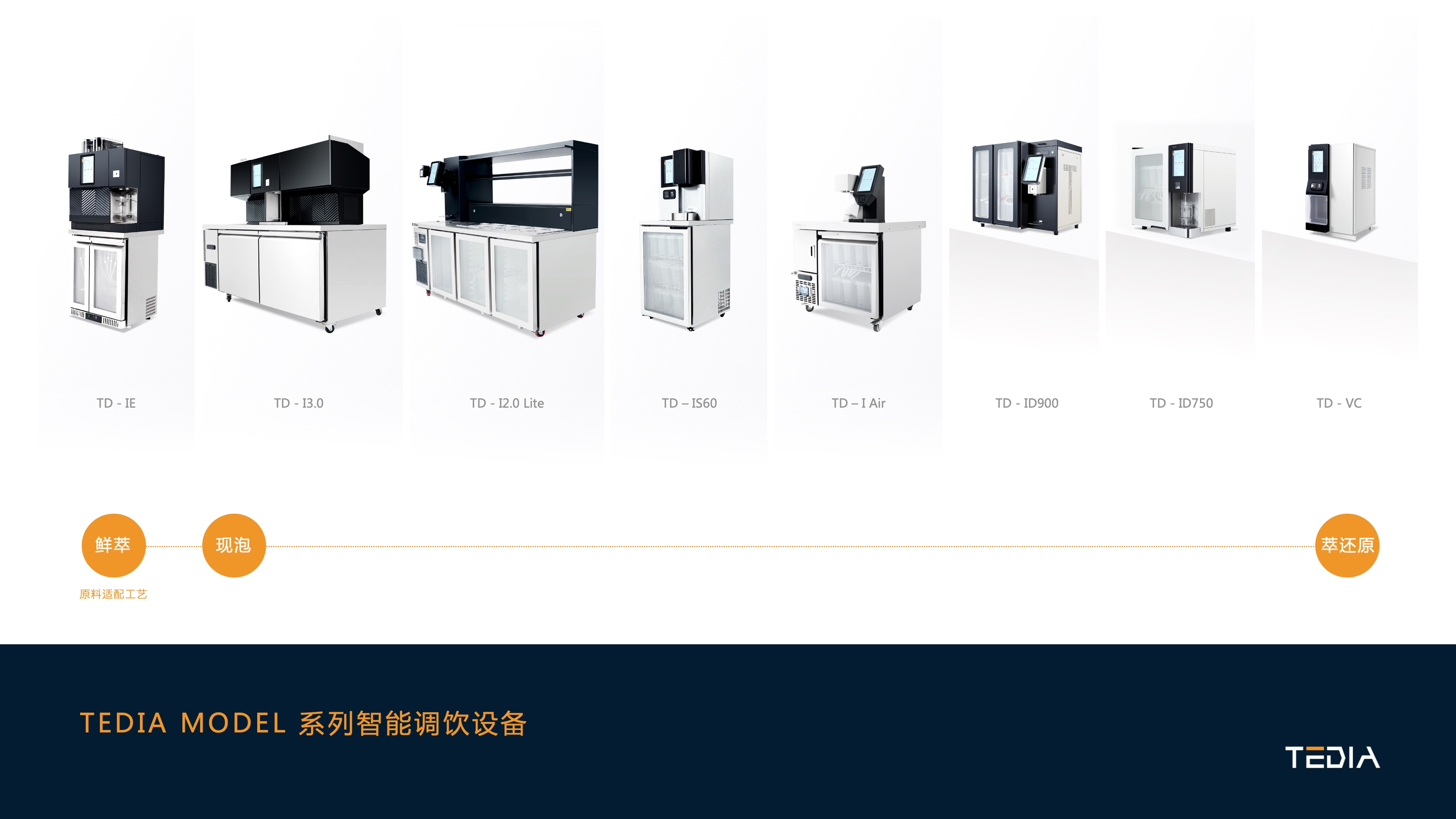
Intelligent Beverage Dispensing Equipment and production management systems respectively support on-site production and centralized control, providing the infrastructure that chain beverage brands need to manage distributed production networks.
Three questions need to be considered:
1. Can every store node consistently and precisely complete production over the long term?
2. Can the brand’s production rules continue to be implemented, while headquarters maintains remote visibility into the actual execution at each node?
3. Can the equipment and systems meet the safety and compliance requirements of different regions and countries, obtain commercial market access, and be deployed successfully?
These three questions correspond to three fundamental capabilities required to manage a distributed production network: production, centralized control, and cross-market deployment. Long-term stability is the shared goal and benchmark for evaluating all three capabilities.
Production: Long-Term Stability and Precision
A brand’s product standards need to be implemented in every store and reflected in every beverage produced. Every production node must maintain stable and precise dispensing throughout long-term operation.
When TEDIA Intelligent Beverage Dispensing Equipment is first commissioned, it is calibrated according to the characteristics of the ingredients being dispensed. During daily startup, the equipment performs self-checks without requiring repeated calibration.
During operation, sensors continuously monitor actual dispensing conditions. Pumps and pipelines maintain stable operation, while algorithms continuously identify operating conditions and make dynamic adjustments. When the system detects a deviation from the standard, it automatically performs calibration or prompts the operator to make the necessary correction, depending on the situation. Production then resumes once the adjustment is completed.
This dynamic balancing and calibration mechanism, enabled by the coordinated operation of hardware and software, allows precise dispensing to be maintained over long-term operation — including for non-homogeneous, high-viscosity ingredients such as fruit jams and yogurt.
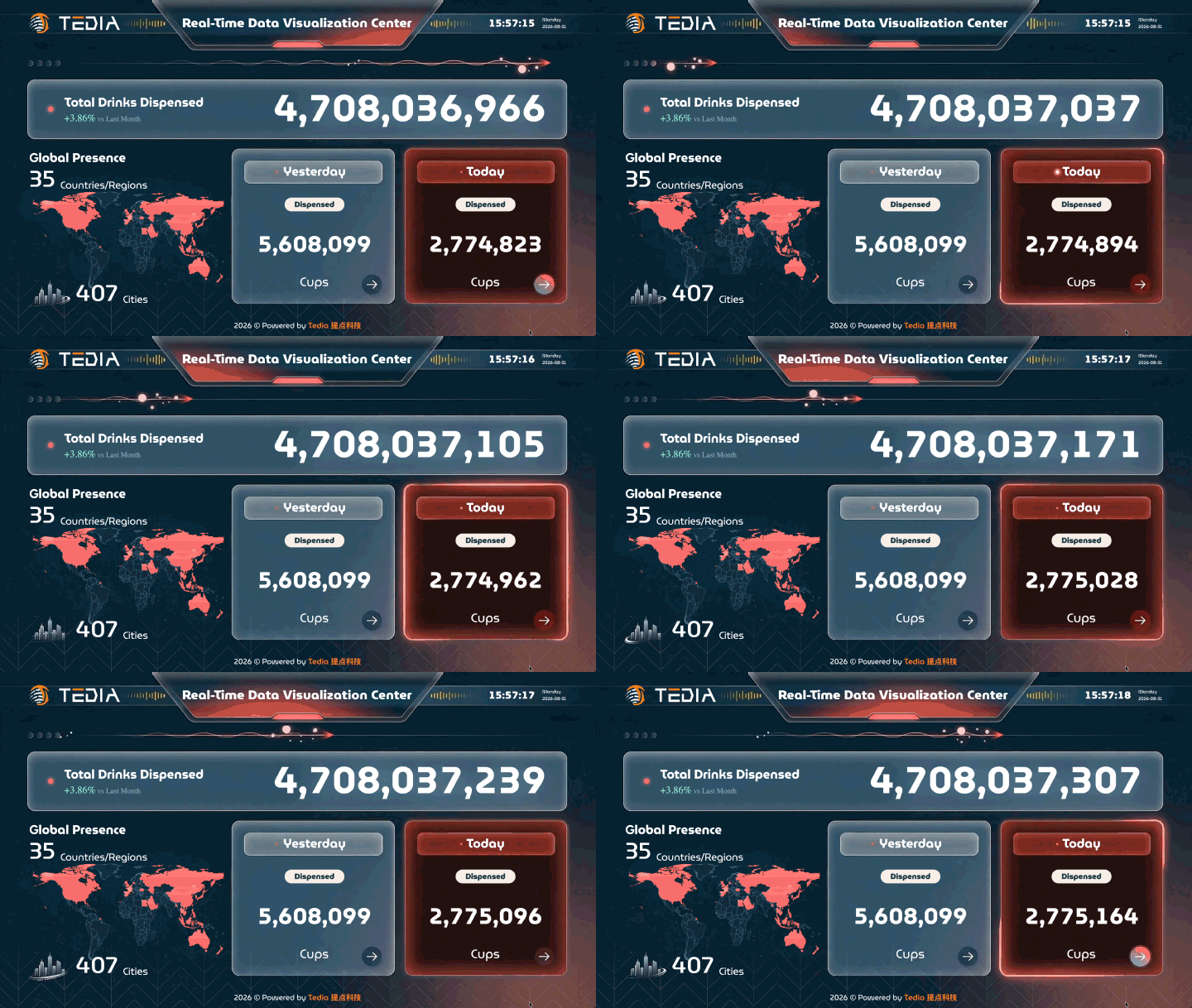
As of August 2026, TEDIA Intelligent Beverage Dispensing Equipment has cumulatively produced more than 4.7 billion cups. The equipment operation and dispensing data accumulated through long-term use in real-world operating environments continuously support the iteration of intelligent control algorithms and the improvement of control capabilities.
Centralized Control: Continuous Rule Execution and Stable Data Feedback
Managing a distributed production network requires a brand’s production rules to be continuously implemented across every node, with actual execution data consistently returned to headquarters.
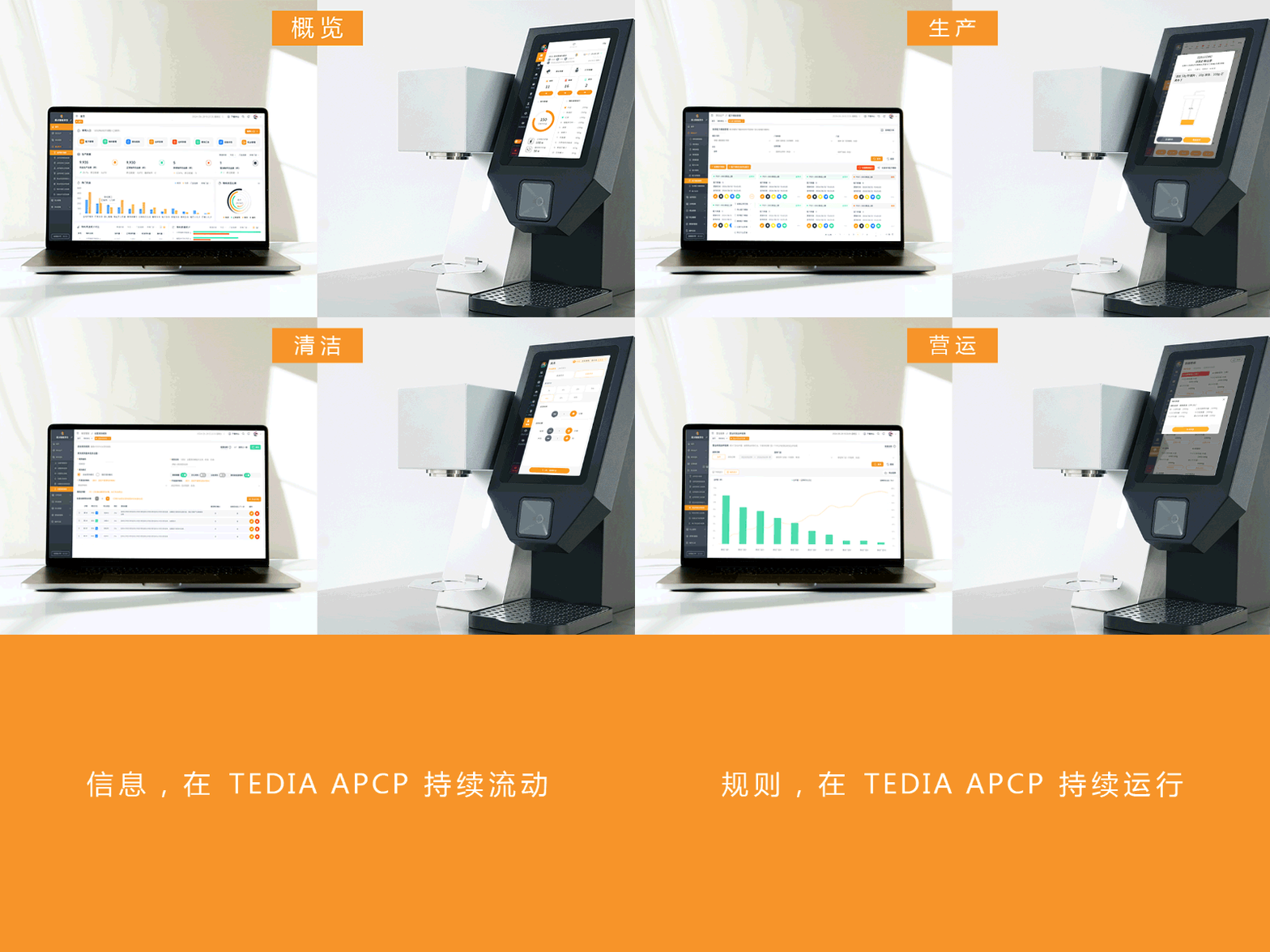
The TEDIA APCP Automated Production Control Platform establishes management hierarchies across organizations, store groups, stores, and individual machines, with corresponding management scopes defined through roles and permissions.
Through the management backend, headquarters configures production rules such as recipe versions, ingredient requirements, cleaning procedures, and alerts, determines their scope of application, and releases them to designated stores or equipment. Equipment terminals then translate these rules into operational interfaces, workflow prompts, and equipment actions, which stores execute during actual production.
As equipment performs production and store employees operate the terminals, structured data is generated simultaneously. Information including recipe settings and actual dispensing volumes, production status and duration, ingredient replenishment, usage and waste, cleaning activities and timing, exception records, and equipment operating status is associated with the corresponding organization, store, equipment, time, and rule version, and continuously returned to the management backend.
This data feedback mechanism returns the actual execution process at every node to headquarters in a structured format. Headquarters can therefore inspect individual nodes as well as compare execution across different regions, stores, equipment, and time periods. This makes it possible to identify where and at which stage an issue occurred and to make targeted improvements to production rules, employee training, equipment maintenance, ingredient management, and store operations.
As of August 2026, TEDIA Intelligent Beverage Dispensing Equipment has reached a peak daily output of more than 16.5 million cups. From ingredient loading and beverage production to equipment cleaning, production-chain data is collected and uploaded in real time through actual production and terminal operations.
With daily production reaching tens of millions of cups, TEDIA APCP continuously collects and feeds back structured production data from individual nodes, supporting headquarters in querying and comparing operational data while enabling remote management of large-scale production networks.
Cross-Market Deployment: Safety, Compliance, and Market Access
When a brand expands into different regions and countries, its equipment and systems must not only maintain production and centralized control capabilities, but also meet local requirements for food safety, electrical safety, product compliance, environmental protection, and information security.
TEDIA Intelligent Beverage Dispensing Equipment has obtained and complies with food safety certifications and standards including NSF, ETL Sanitation, GB, and LFGB, as well as electrical safety, product compliance, and environmental requirements including ETL Listed, CE, UKCA, PSE, KC, and RoHS.
TEDIA Technology has also obtained ISO 9001, ISO 20000, and ISO 27001 management system certifications, covering quality management, information technology services, and information security respectively.
As of August 2026, TEDIA Intelligent Beverage Dispensing solutions have been deployed across 35 countries and regions and more than 400 cities.Product certifications, management systems, and proven market deployment together provide the foundation for the equipment and systems to enter different markets and complete commercial deployment and application.
Only when these three capabilities — production, centralized control, and cross-market deployment — can remain stable as the number of production nodes increases and the operational footprint expands, can Intelligent Beverage Dispensing Equipment and production management systems effectively support brands in managing distributed production networks over the long term.
TEDIA Delivers Certainty.
Related Reading:
TEDIA Delivers Certainty | Long-Term Precision Is the True Technology Divider
TEDIA Delivers Certainty | Transforming Brand Standards into Store-Level Production Capabilities
TEDIA Fresh Beverage Operations Engineering System
The "Key Player" Behind the Scenes of CHAGEE Revealed: Technological Leadership Extending Beyond a 2‰ Dispensing Error Rate



 返回
返回