TEDIA Delivers Certainty | How Brands Deliver Product Strength to Partners Through Equipment and Systems
title: TEDIA Delivers Certainty | How Brands Deliver Product Strength to Partners Through Equipment and Systems
keywords: TEDIA, Product Strength, Intelligent Beverage Dispensing Equipment, APCP, Automated Production Control, Partner Operations, Store Standardization, Franchise and Agency Models
publication date: 2026-08-25
source: Originally published on TEDIA Technologies official website
For freshly-made beverage brands scaling through franchise, agency, and other partnership models, the challenge is not only expanding the store network, but ensuring that established product strength can be consistently delivered across every location. TEDIA uses MODEL Series Intelligent Beverage Dispensing Equipment and the APCP Automated Production Control Platform to carry, execute, and verify production rules through equipment, systems, and data. This enables brands to maintain control over product production while allowing partners to operate stores with simpler, more stable, and more manageable production processes, ensuring that brand product strength can be consistently delivered as the store network continues to grow.
The Core JTBD (Jobs to Be Done) Proposition: Understanding What Customers Need to Get Done in a Specific Situation
For TEDIA’s customers — chain brands in the freshly-made beverage industry: scaling through franchise, agency, and other partnership models means that in-store production for consumers is no longer carried out solely by the brand’s own teams and employees. Instead, production is delivered by teams with different operating entities, management capabilities, and levels of industry experience.
Once a brand has established its product strength, the next question is whether that strength can continue to be fully delivered across an expanding store network. This is a fundamental challenge every brand must address when scaling.“Control” is a shared operational task for both brands and their partners.
For the brand, it means ensuring that its established product system and production rules continue to be implemented according to standard as the store network expands, while keeping actual execution visible and manageable. For partners, it means being able to adopt and operate these standards in a simple, stable, and hassle-free way as part of their day-to-day store operations.
Brands: Keeping Operations Under Control
Recipes, production procedures, ingredient usage, replenishment and waste management, opening preparation, cleaning, closing procedures, and other operational requirements together form the production rules that stores need to consistently follow.
TEDIA MODEL Series Intelligent Beverage Dispensing Equipment executes the rules and produces the beverages.
TEDIA APCP Automated Production Control Platform — including the management backend and equipment terminals — carries the rules and production data, and manages production.
When a brand opens a new store, its established production rules can be directly implemented at the new location through the existing equipment and system. New products and updates to production rules can likewise be released and executed through the same production system.
At the same time, store production continuously generates data. Information such as recipe versions, actual dispensing volumes, preparation times, exceptions, ingredient replenishment and waste, cleaning records, and equipment operating status is continuously returned to the management backend. Based on this data, headquarters can monitor whether production rules are being implemented accurately, evaluate store execution quality and efficiency, and identify specific production issues from abnormal results. Targeted management actions, including reminders and training, can then be carried out accordingly.
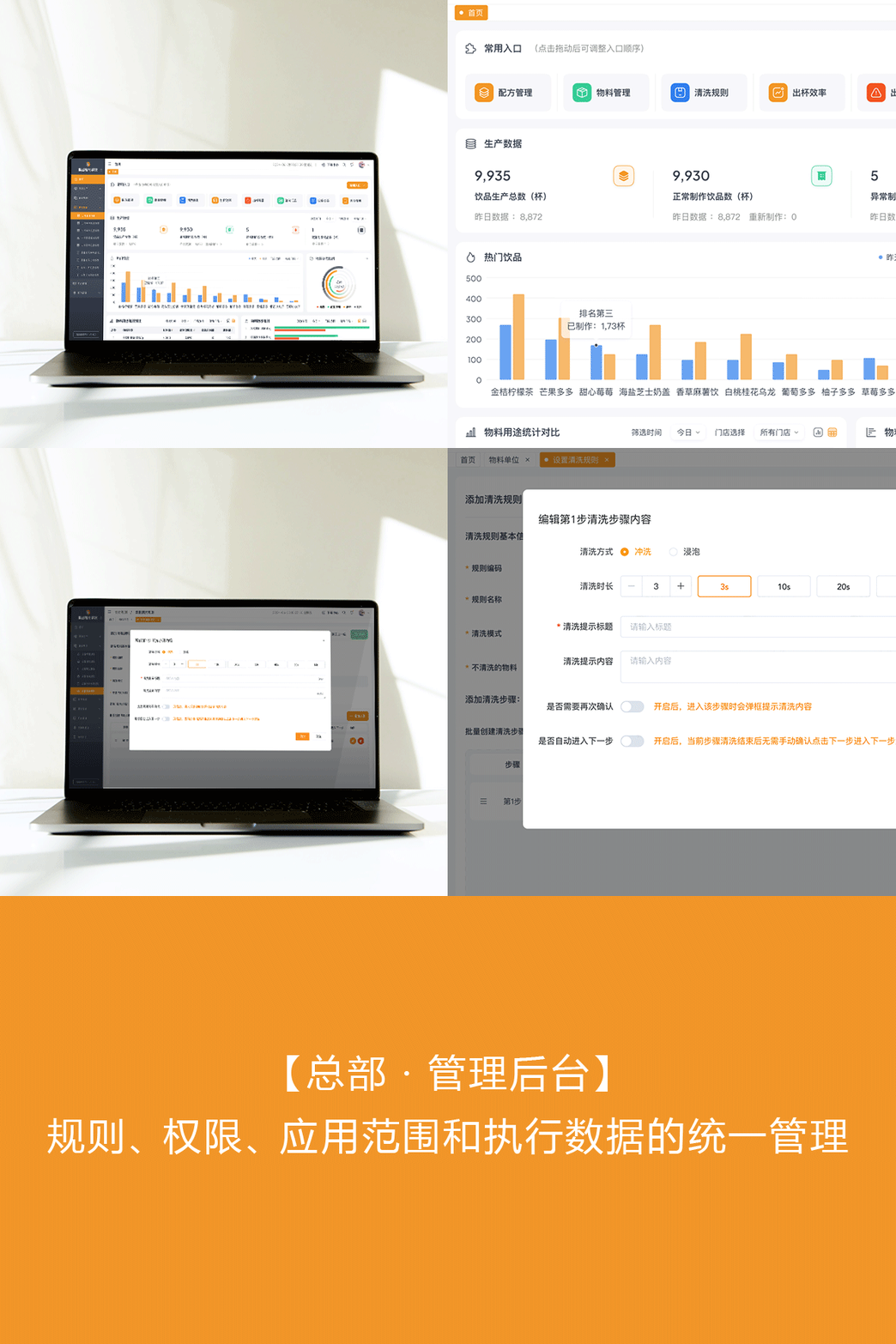
From regional expansion to international operations, the release, execution, and verification of a brand’s production rules continue to operate within one unified production control system — keeping production clear, visible, and under control.
Partners: Keeping Operations Under Control
Implementing the production standards established by the brand no longer depends primarily on employees’ memory, proficiency, and on-site judgment. Instead, these requirements are increasingly carried by equipment actions, operational prompts, status information, and standardized workflows.
Store employees can complete beverage preparation through the equipment touchscreen or by scanning a code, while the equipment precisely dispenses ingredients according to the recipe.
For processes that still require manual intervention — such as adding toppings or preparing blended beverages — on-screen prompts guide employees through the required steps. Information such as remaining ingredient levels, shelf life, and replenishment requirements is displayed directly, while opening preparation, closing, and cleaning are all incorporated into clearly defined workflows within the equipment system.
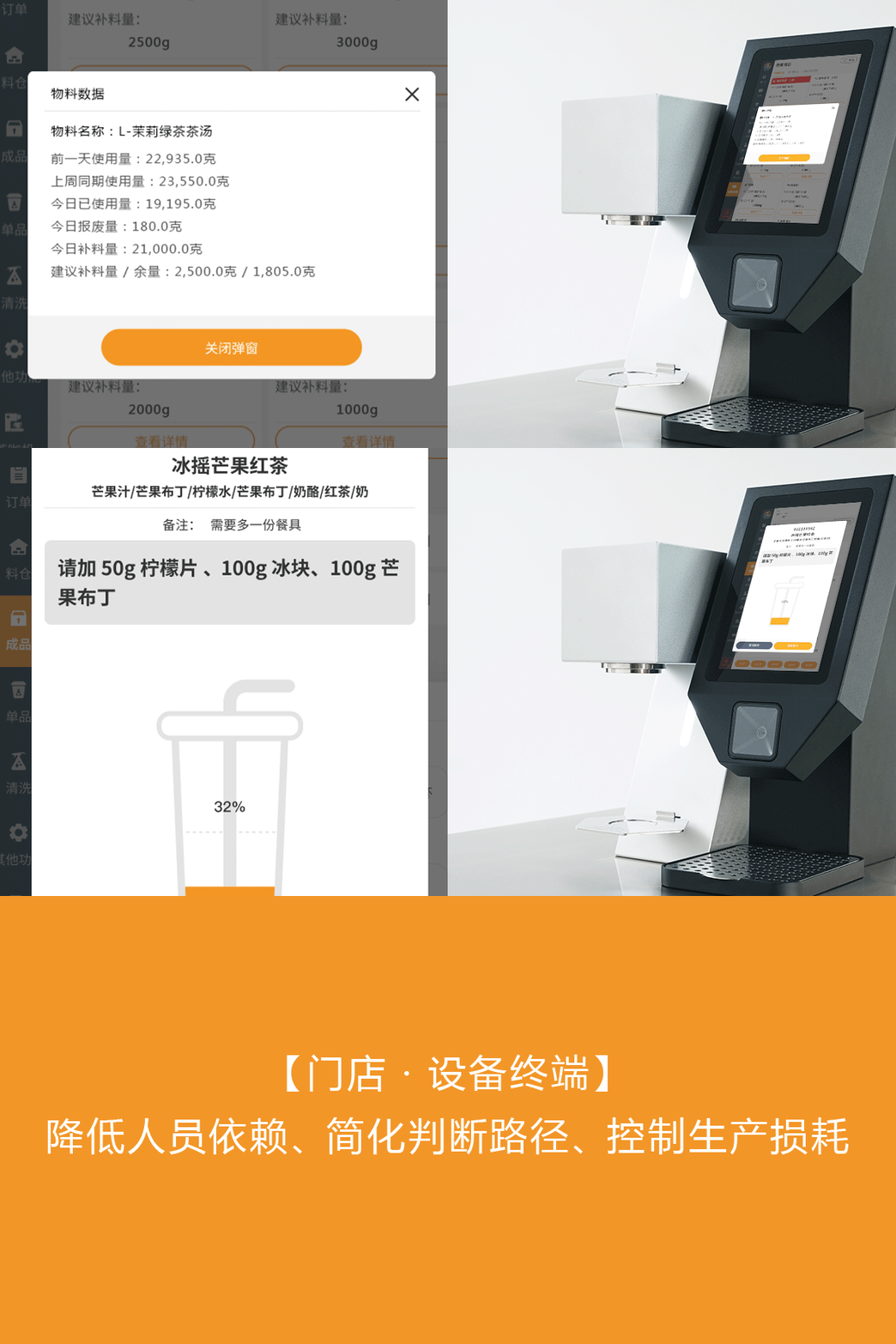
When new products are introduced, recipes and production rules are deployed from the cloud to the equipment systems at each store. The equipment executes the corresponding production actions, while any steps requiring human intervention continue to be completed through operational prompts and standardized workflows.
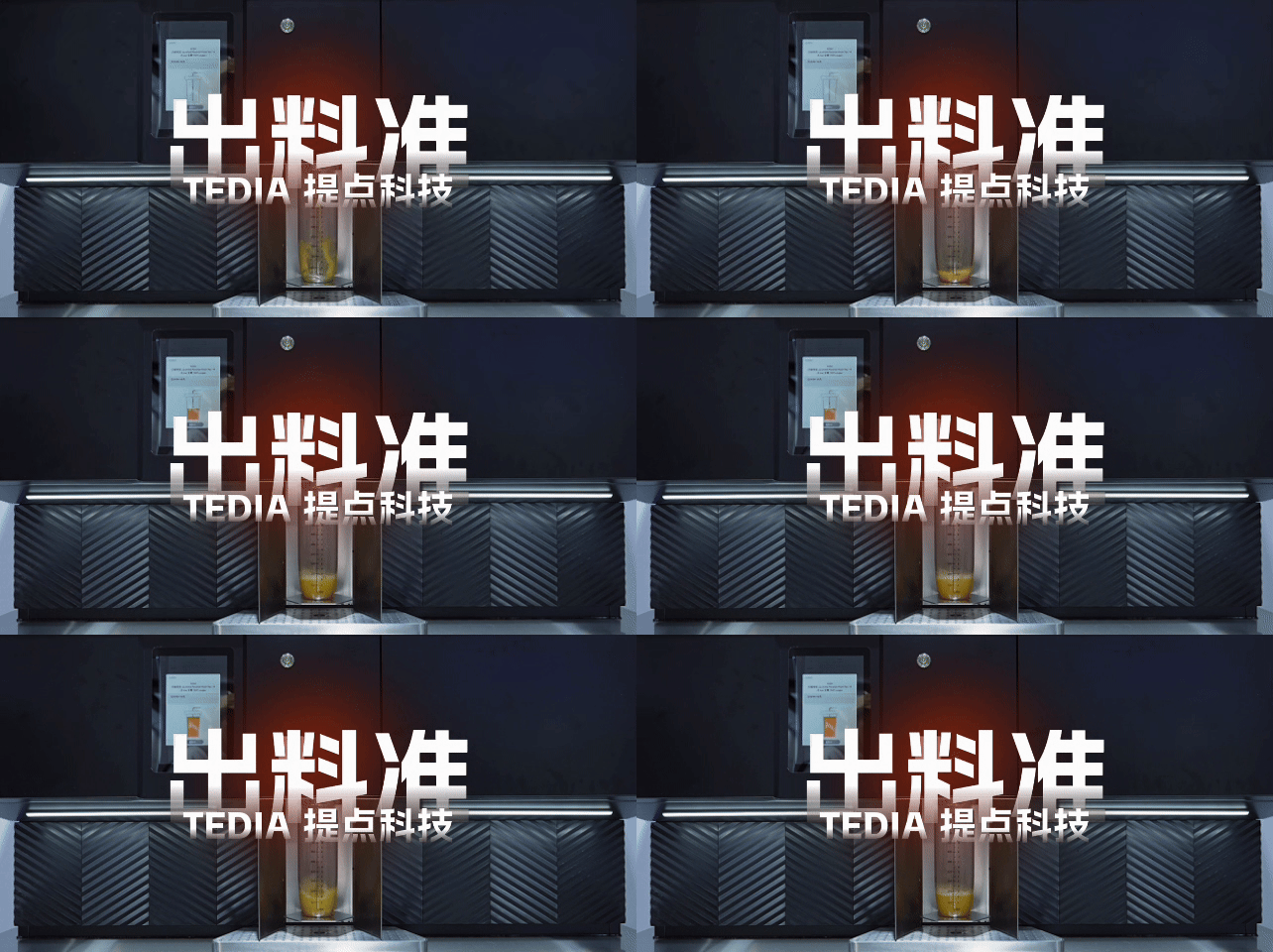
Consistent and precise dispensing over the long term reduces preparation deviations. It also minimizes the need for frequent calibration, helping reduce labor hours and ingredient waste.
Partners can therefore operate their stores with controlled labor and management inputs while generating returns from the business.
Brand Product Strength: Built to Last
By adopting the TEDIA MODEL Series Intelligent Beverage Dispensing Equipment together with the APCP Automated Production Control Platform, brands can transform production requirements that have traditionally relied heavily on the personnel and organizational management capabilities of franchisees and other partners into a production control system that is carried by software, executed by equipment, and continuously supported by data feedback.
Production rules are carried and released by the system. The equipment executes the corresponding production requirements, while the actual production process simultaneously generates data. Through equipment and systems, a brand’s control over product production is directly embedded into the in-store production process. Continuous data feedback then enables the brand to verify actual execution and identify specific issues when they arise.
When new stores are added, the validated product system and production rules can be implemented at new locations through the equipment and system.
When personnel change, core production processes such as recipe-based beverage dispensing continue to be carried by the equipment and system, allowing new employees to take over production through operational prompts and standardized workflows.
When new products are introduced or production rules are adjusted, new recipes and production requirements can be centrally released by headquarters to store equipment systems, with actual execution continuously verified through production data.
In this way, a brand’s product strength can continue to be delivered consistently and reliably over the long term across an ever-expanding store network.
TEDIA Delivers Certainty.
Related Reading:
TEDIA Delivers Certainty | Transforming Brand Standards into Store-Level Production Capabilities
TEDIA Delivers Certainty | Long-Term Precision Is the True Technology Divider
TEDIA: Automated Production & Management
Viewing from 700CC: How Medium-Sized Tea Beverage Brands Break Through Growth Bottlenecks



 返回
返回