The real challenge in deciding whether to introduce freshly made beverages is not a simple “profitability equation.”
It is an operational “physics problem” — how to make the business model work sustainably within an existing operating system, and continue working over time.
Because once deployed in real operating environments, the challenge extends far beyond the product itself.
Peak-hour efficiency, workforce variability, food safety management, cost fluctuations, operational workflows, and adaptation across multiple scenarios — adding freshly made beverages ultimately becomes an organizational operations challenge. The larger the organization, the greater the operational friction and resulting volatility.
For medium- and large-scale organizations, introducing freshly made beverages is not merely about adding another category.
The more critical consideration is how to integrate this capability into the organization as if it were a native operational function — enabling stable, seamless, long-term execution.
This is precisely why the TEDIA Light-Operation Fresh Beverage Model was created.
Through the coordinated operation of intelligent beverage automation systems, standardized recipe frameworks, and freshness-locking ingredient systems, TEDIA is transforming freshly made beverages from an experience-dependent business activity into an operational structure that can be systematically engineered and deployed.
The core capability is not simply automation itself.
It is the engineering-based encapsulation of the entire operational chain — from recipe development and menu architecture to ingredient preparation and beverage production.
What once depended heavily on human experience, condition, and execution is converted into a stable operational outcome controlled by systems.
Critical variables are systemically locked, while product quality, efficiency, and operational pathways are stabilized and standardized. Labor efficiency and space efficiency become measurable and predictable:
Standalone Unit: A beverage station operated by 2 staff members, covering 7 days a week across breakfast, lunch, and dinner service periods.
Embedded Unit: Requires no additional staffing, supports customer self-service, occupies less than 0.5㎡, and integrates flexibly into existing meal pickup and service workflows.
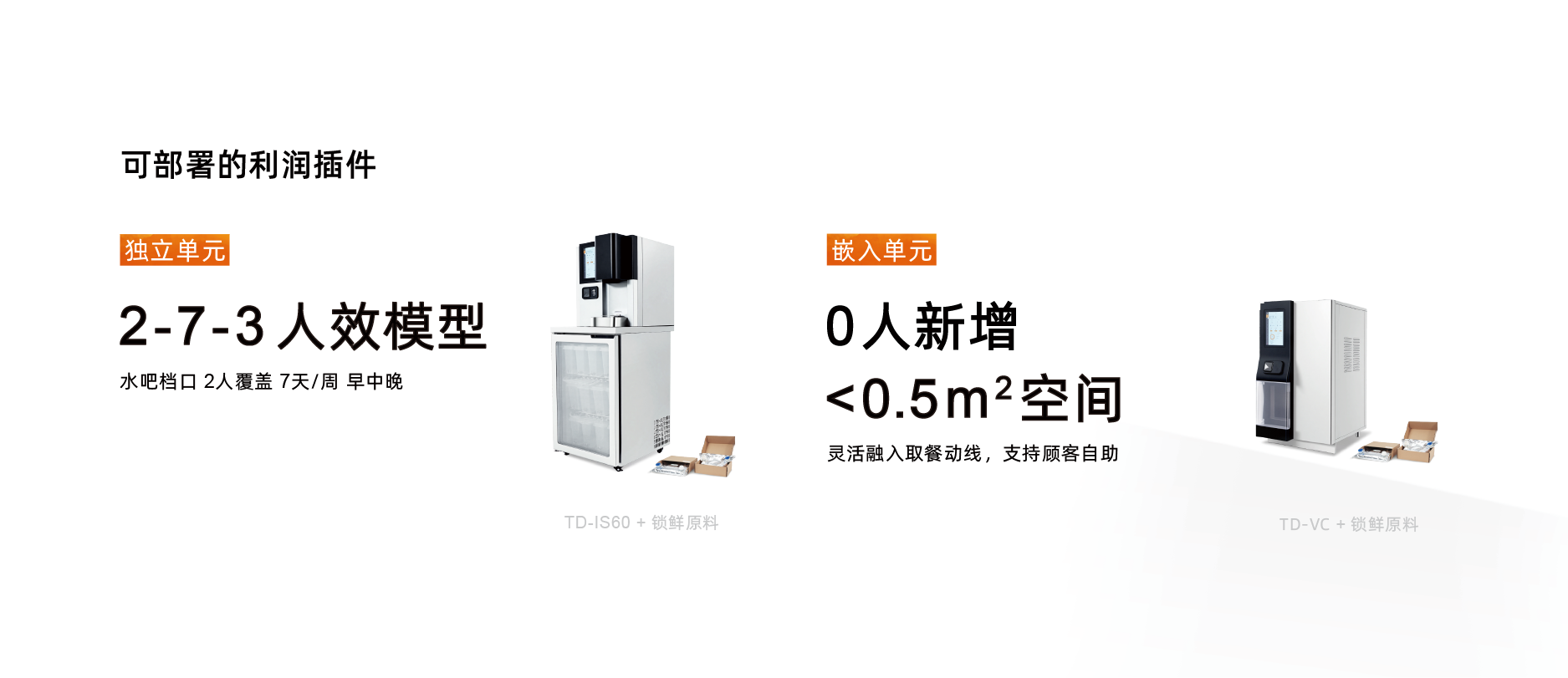
As a result, introducing freshly made beverages no longer means building an additional high-complexity operating system from scratch.
Instead, it becomes the integration of a viable profit plug-in within an existing business structure.
TEDIA has long focused on the engineering and operationalization of freshly made beverage businesses.
From equipment systems and beverage architecture to real-world operational dynamics, the TEDIA Light-Operation Fresh Beverage Model is concerned not only with “how to make a great beverage,” but more importantly, how to make freshly made beverages become a sustainable operational capability within medium- and large-scale commercial dining and institutional foodservice organizations.
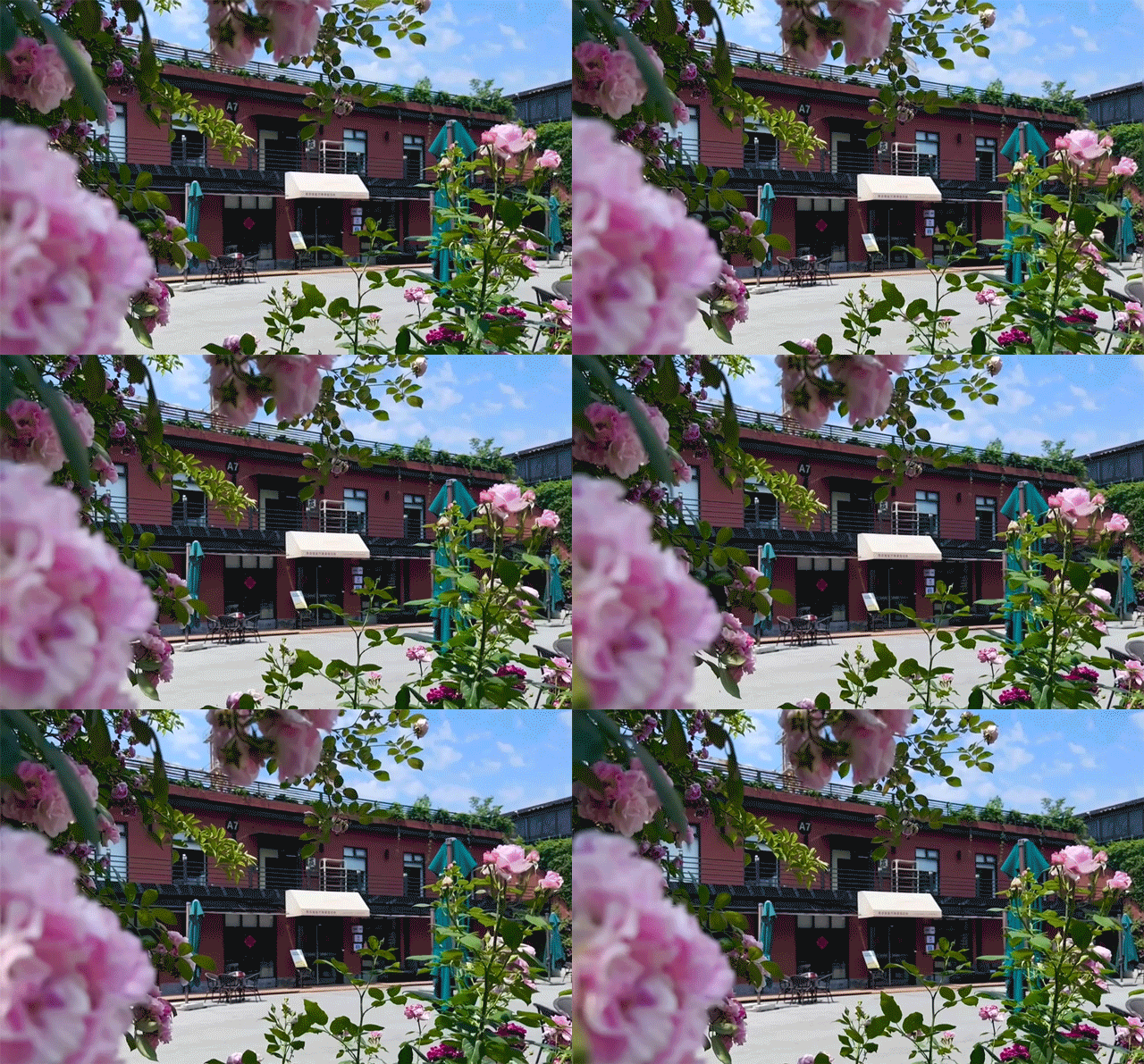
TEDIA Experience Center is located at Taishang Creative Park in Shanghai, conveniently close to the Hongqiao transportation hub.
During this season of blooming roses, we welcome you to visit — and solve the operational equation together.



 返回
返回